
How to Live Stream Amateur Club Matches
How to live stream grassroots football and amateur club matches: kit, connection, camera position, consent for minors, replays and sponsor income.
To live stream an amateur club's matches you need a phone or camera on a raised mount, a connection with a solid upload speed, written consent from parents or guardians to broadcast images of young players, and a private channel where your club community can watch. If you also want every game saved as a replay with a timeline of goals, cards and substitutions, a sports club management app such as Clubily keeps it all in one place. This guide walks you through how to stream a match live without professional kit.
Why live stream grassroots and amateur football matches?
Every weekend there are grandparents who live too far away, parents working a Saturday shift and siblings playing at the same time on another pitch. Streaming grassroots football matches lets them follow the game without standing on the touchline. For the club, a live stream is its own content: it gives teams visibility, keeps families engaged all season and creates something you can offer to local sponsors. You don't need a production company, just a bit of planning.
What do you need to stream a match live?
The basic kit for streaming amateur matches fits in a backpack:
| Item | What it's for | Practical tip |
|---|---|---|
| Phone or camera | Recording and sending the stream | A recent smartphone is enough; always film in landscape |
| Tripod or mount | Keeping the picture steady | Ideally tall enough to clear the pitch-side barrier |
| Power bank | Lasting the whole match | Charge it the night before and pack the right cable |
| Internet connection | Sending video in real time | Mobile data with good coverage, or the venue's Wi-Fi |
| Streaming channel | Letting families watch | A private club channel rather than an open one |
| A named volunteer | Looking after the stream and the kit | One regular person per match avoids last-minute scrambles |
Once you have the routine sorted, add a second volunteer who logs match events while the first one handles the camera.
What connection do you need to stream without drop-outs?
For a live stream, upload speed matters far more than download speed, and coverage at many council-run pitches is patchy. Before your first match:
- Run an upload speed test from the exact spot where the camera will go, at the same time of day you play.
- Ask whether the venue has Wi-Fi you can use for streaming; if it is shared with the clubhouse bar or offices, it can get congested.
- Check your data allowance: a full match uses a lot of data, so a generous plan or a dedicated club SIM is worth it.
- Turn on Do Not Disturb so a phone call doesn't cut the stream.
Do a test broadcast at a training session first. It's the most reliable way to catch problems before families are watching.
Where should you put the camera or phone?
Position makes or breaks the stream:
- High up and level with the halfway line. From the stand or a tall tripod you can see the whole game and follow the play.
- Landscape, always. Portrait mode crops the pitch.
- With the sun behind you, to avoid shooting into the light at morning or evening kick-offs.
- Away from the dugouts and walkways, so you don't pick up private conversations.
- Protected from rain and heat, so the phone doesn't shut down mid-match.
For indoor sports such as basketball or handball, the same rule applies: a raised, central position along the side of the court.
What consent do you need to stream images of children?
This is the most sensitive part of streaming youth football. What follows is general guidance, not legal advice: every country, governing body and competition has its own rules, so check with your club committee, your safeguarding lead and a data protection adviser before you start.
In general terms, it's wise to:
- Get written consent from parents or guardians to film and share images of under-18 players, explaining where the stream will appear and who can watch it.
- Be clear about the purpose: live only, replay, or both, and how long the recording will be kept.
- Have a plan for players without consent, such as not streaming that match or framing shots so the child can't be identified.
- Restrict access to club families and members instead of broadcasting publicly.
- Check the rules of your league, governing body and venue, which may cover filming at matches.
- Remember the opposition has children too, and their families haven't signed your club's consent form.
In the EU, an image of an identifiable person is personal data protected under the GDPR, so it pays to get this right from day one.
How do you share the stream with families?
There are two routes. A public social media channel is free and familiar, but the match is open to anyone and you can't control who watches the children. A private club channel only lets in people with access. For youth football, the private route is the safer choice.
Whichever you choose, announce it in advance: post in the club news or the team chat which match will be streamed, when, and how to watch.
What are replays for?
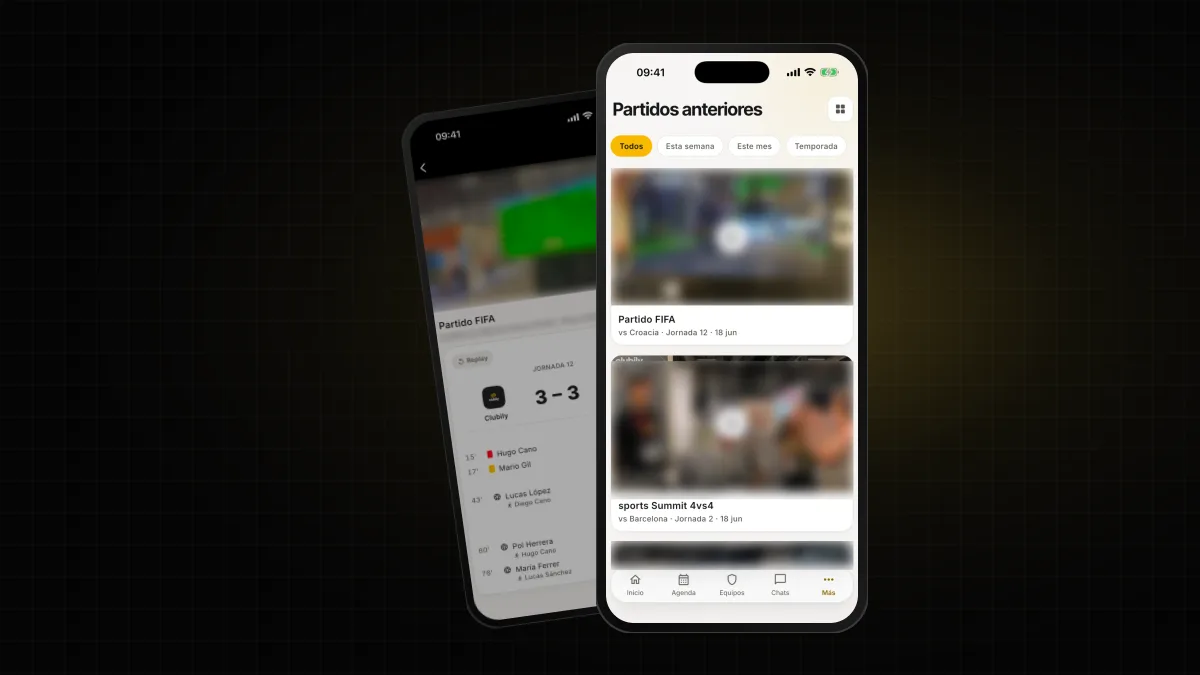
A replay, the recording that stays available after the final whistle, lets families watch the match whenever they can and gives coaches footage to review specific moments with players. It is far more useful with a timeline of goals, cards and substitutions so you can jump straight to the moment you need.
Can live streaming bring in sponsorship income?
A live stream is a shop window that comes round every weekend. A few ideas to offer local businesses:
- Headline sponsor of the streams: a local brand "presents" the club's live matches for the season.
- Mentions in match announcements, in club news and team chats.
- Age-group sponsorship: a business backs the streams of the under-10s, the under-14s or the first team.
For more ideas, read our full guide on how to get sponsors for an amateur sports club.
How does Clubily stream matches?
Clubily is a sports club management app (iOS app and web app) that includes live streaming and replays of past matches with a timeline of goals, cards and substitutions. Streams and replays live inside the club's app, alongside the calendar, squad call-ups, stats and chats, so families don't have to hunt for the match on another platform.
Streaming comes as optional add-ons to the Club plan, which starts at €17.98/month:
| Club plan add-on | Monthly price |
|---|---|
| Live Games | €20/month (8 matches included; +€5 per extra match) |
| Past Games (replays) | €10/month |
Streaming is available for football, basketball, volleyball, rugby, water polo, handball, American football and hockey. Racket sports (padel, tennis, table tennis and badminton) don't include streaming. If your club wants to go further, the Personalized Plan gives you your own app with the club's branding, plus sponsors and your own advertising spaces to help fund the club.
Frequently asked questions
Can you stream an amateur match with just a phone?
Yes. A phone in landscape on a raised mount, with a power bank and good mobile coverage, is enough to stream an amateur match.
Do you need consent to stream youth football matches?
Generally, yes: you should have written consent from the families of under-18 players. Always check with your club and a qualified adviser before going live.
How much does it cost to stream matches with Clubily?
The Live Games add-on costs €20/month on the Club plan and includes 8 live matches a month; each extra match costs €5. Replays of past matches cost €10/month.
Can you stream padel or tennis matches on Clubily?
No. Racket sports don't include streaming on Clubily.
Start streaming your club's matches
Streaming doesn't take a big budget, just good organisation: simple kit, a tested connection, clear consent and a private channel for families. If you want live streams, replays and club management in one app, sign your club up to Clubily.